What GSM is best for premium streetwear t-shirts?
GSM, or grams per square meter, measures fabric weight. Tee fabric usually runs from about 140 GSM at the lightest to 280+ at the heaviest. For streetwear tees, the structured, drape-forward range sits roughly between 220 and 280. Below that, the fabric reads thin. Above that, you are moving into sweat-style territory.
What GSM actually tells you
GSM is just weight per area. Two fabrics at the same GSM can still feel different depending on the knit and the cotton used. But broadly, higher GSM means more material per square meter, which means more structure, more weight on the body, and longer wear life.
What each range feels like
At 140 to 180 GSM, the fabric is light and breathable, suited to summer basics and undershirts. It drapes close to the body and shows what is underneath.
At 190 to 220 GSM, you get a mid-weight tee. Holds shape, takes prints well, works year-round.
At 220 to 280 GSM, the fabric has structure. It holds the shoulder line, the hem does not curl, and oversized cuts hang the way they are meant to. This is where most structured streetwear tees sit.
Above 280 GSM, you are in heavyweight territory, closer to a light sweatshirt. Excellent for winter, less practical for warm weather.
Why streetwear leans heavier
Oversized silhouettes need fabric weight to hang correctly. A light fabric on an oversized cut collapses and looks shapeless. The weight is what gives the cut its line.
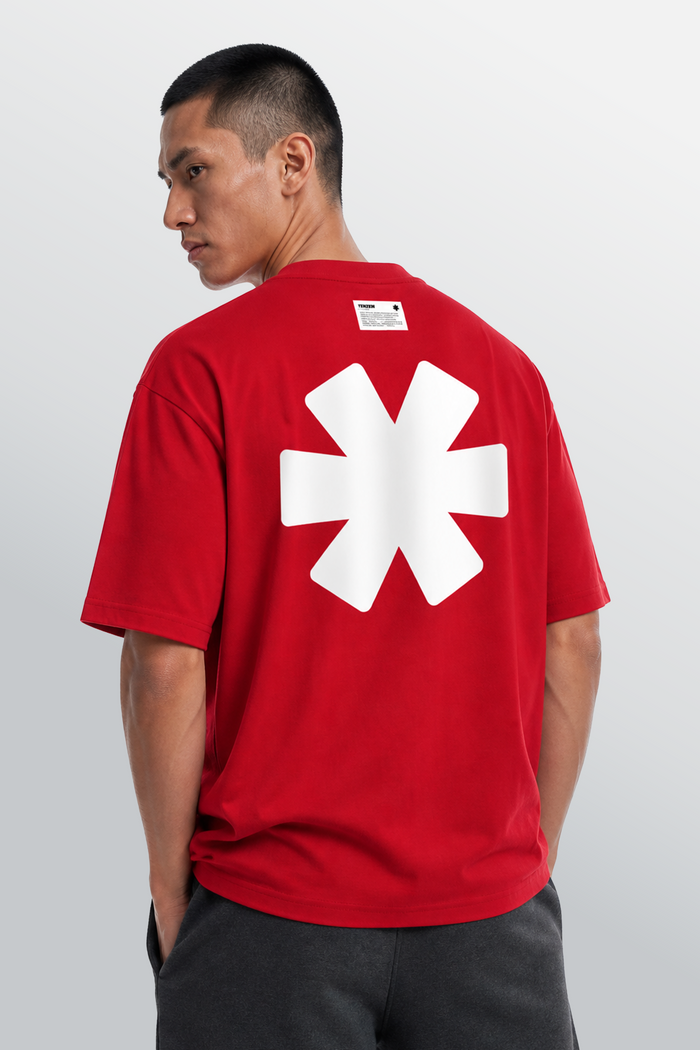
As one reference point, Tenzen Crew tees are built at 260 GSM, which sits in the structured-streetwear range.
How to think about it
There is no single best GSM. Pick by use. Summer basics: lighter. Year-round structured tees: 220 to 260. Cooler weather or layering pieces: 260 to 280.